
The story of industry is one of relentless transformation, profoundly reshaping human existence, work, and global interaction. Each industrial revolution, from the raw power of steam to the intelligence of AI, has ushered in monumental shifts, guiding us toward the cusp of Industry 5.0.
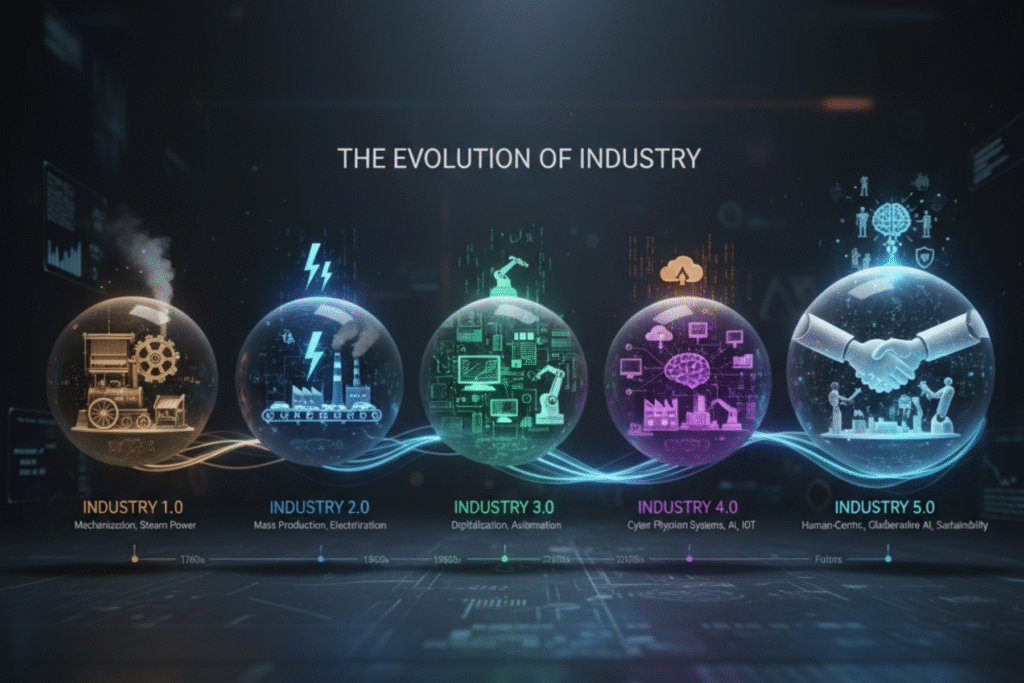
Industry 1.0: The Dawn of Mechanization
The story of industry is one of relentless transformation, profoundly reshaping human existence, work, and global interaction. Each industrial revolution, from the raw power of steam to the intelligence of AI, has ushered in monumental shifts, guiding us toward the cusp of Industry 5.0.
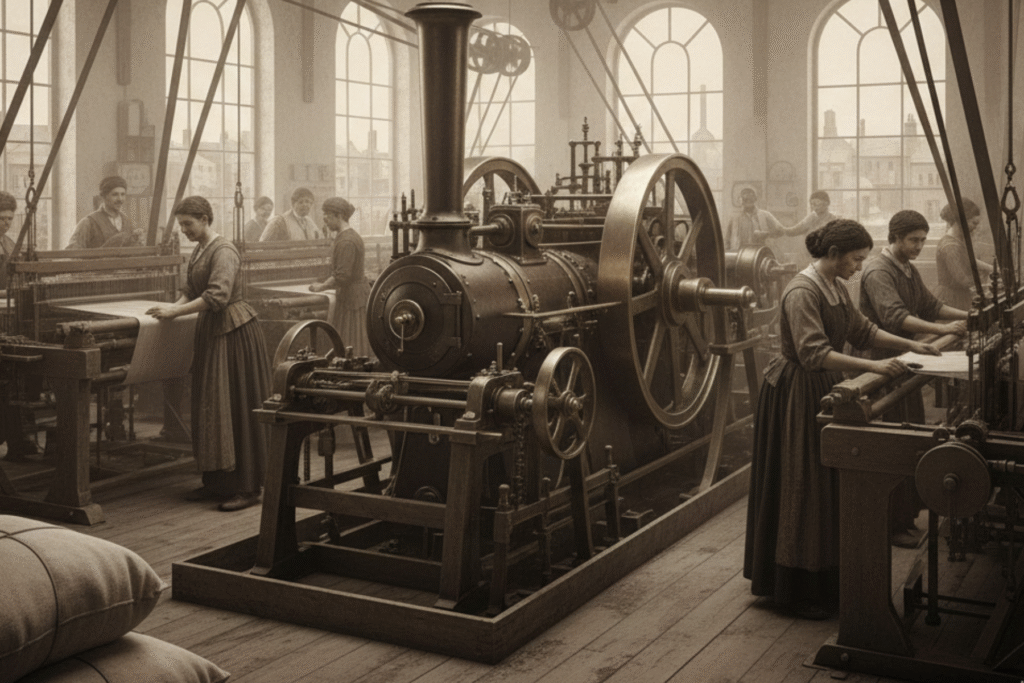
Industry 2.0: The Age of Mass Production
Spanning the late 19th and early 20th centuries, the Second Industrial Revolution was defined by electrification, assembly lines, and high-volume manufacturing. Electricity revolutionized factories with more efficient, continuous operations. Henry Ford’s innovative assembly line vastly boosted productivity and lowered costs, initiating an era of widespread consumerism. This period also saw significant strides in steel, chemicals, and internal combustion engines, further accelerating industrial expansion.
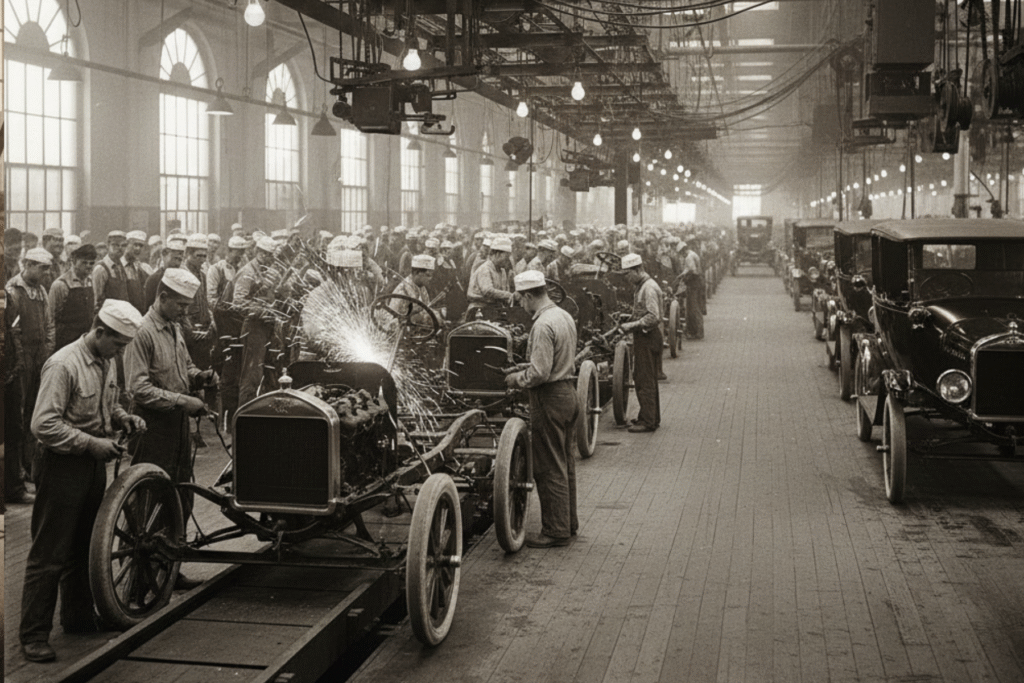
Industry 3.0: The Digital Leap
The latter half of the 20th century heralded Industry 3.0, the Digital Revolution. It was characterized by the integration of electronics, information technology, and advanced automation. Inventions like the transistor, microprocessors, and personal computers automated countless human tasks. Programmable Logic Controllers (PLCs) became central to manufacturing, enabling greater precision and process control. The internet’s emergence further propelled this revolution, globalizing communication and data exchange.
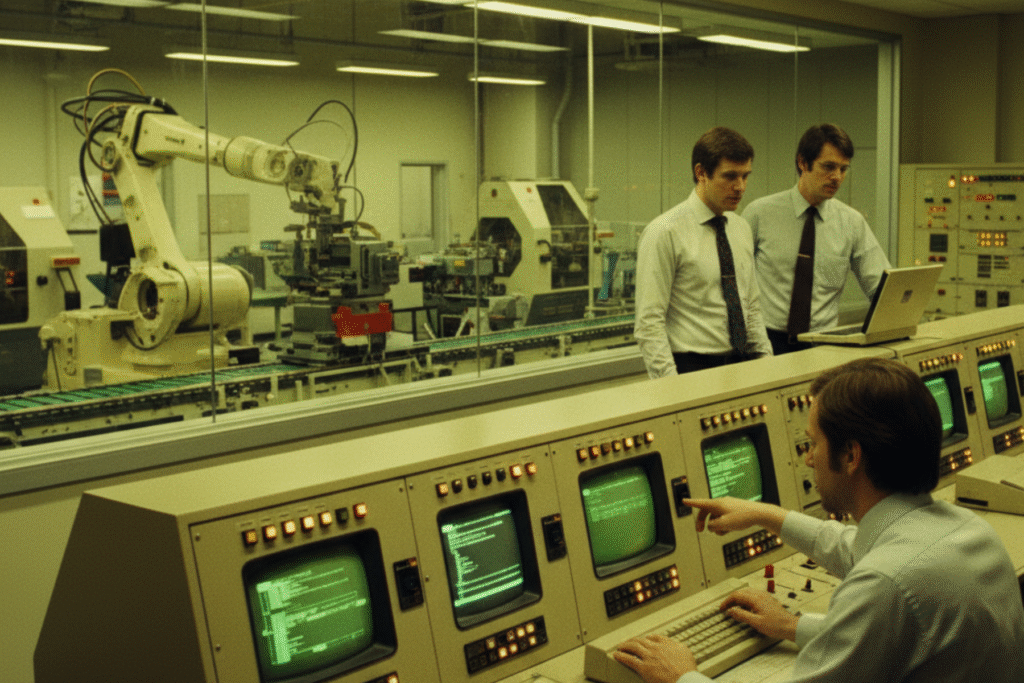
Industry 4.0: The Connected Intelligence
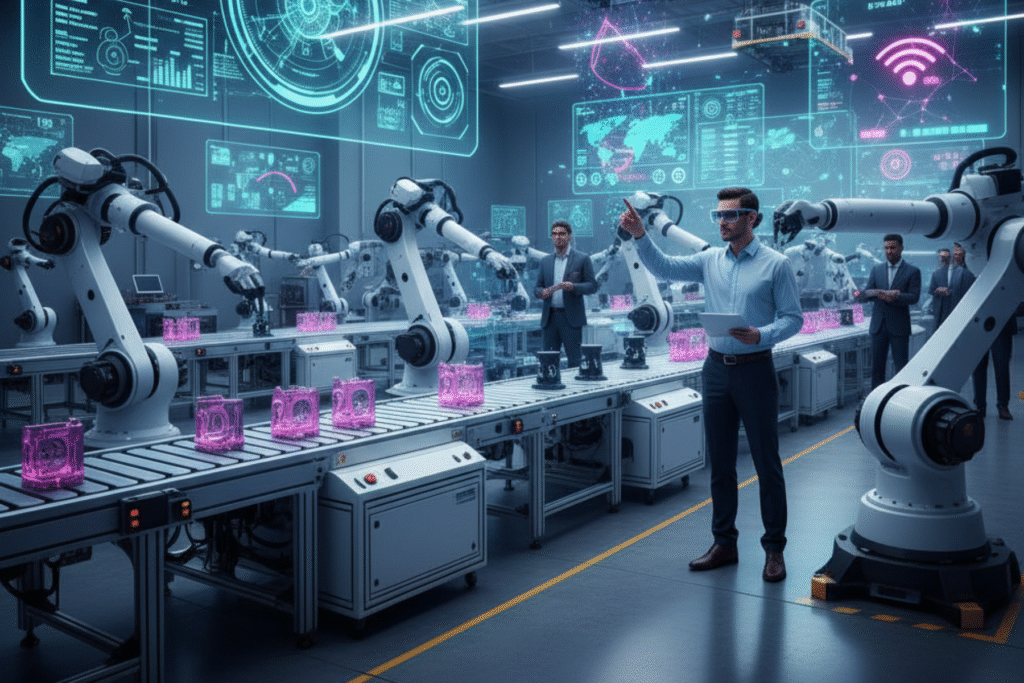
Currently, we are immersed in Industry 4.0, a revolution driven by interconnected cyber-physical systems, the Internet of Things (IoT), and Artificial Intelligence (AI). This stage dissolves boundaries between the physical and digital. IoT-enabled smart factories communicate and self-optimize production. Big data analytics and AI deliver insights for enhanced decision-making and predictive maintenance. Cloud computing and robust cybersecurity are vital for these interconnected systems’ secure and efficient operation. Industry 4.0 promises unprecedented manufacturing efficiency, customization, and responsiveness.
Industry 5.0: The Human-Tech Harmony
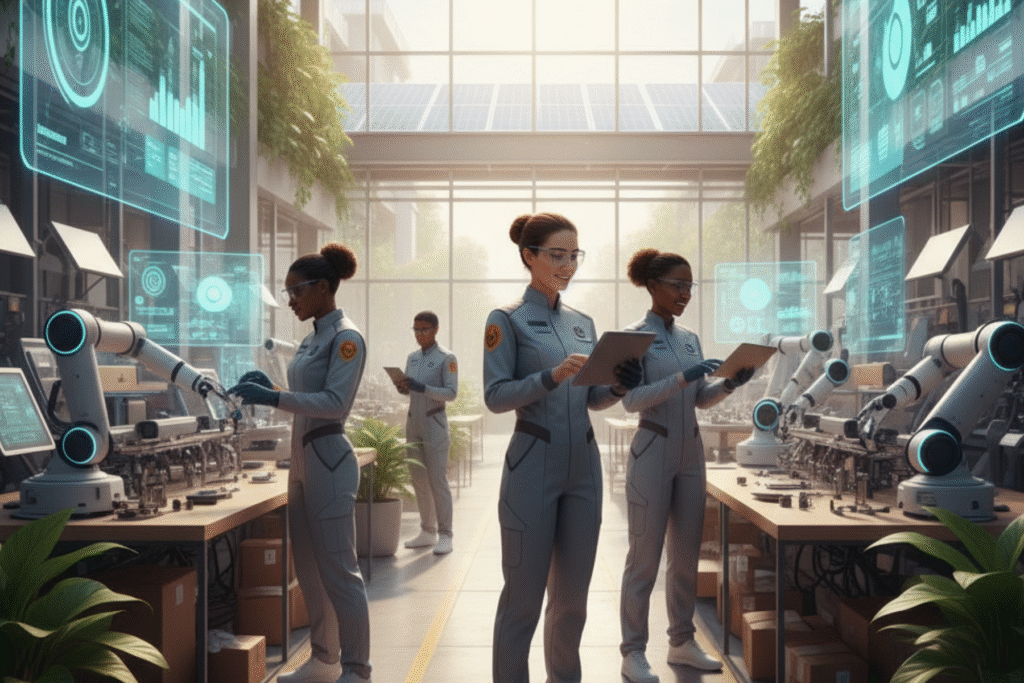
Looking forward, Industry 5.0 represents the next frontier. While Industry 4.0 prioritized efficiency and automation, Industry 5.0 champions the integration of the human element with cutting-edge technology. It promotes a human-centric approach, where collaboration between people and intelligent machines (cobots) is paramount. This upcoming revolution aims to harness human creativity and problem-solving, amplified by AI and robotics, to forge highly customized and sustainable solutions.
Key Tenets of Industry 5.0:
- Synergistic Human-Robot Collaboration: Moving beyond simple automation, Industry 5.0 envisions seamless teamwork between humans and robots, with robots assisting in complex tasks and managing repetitive or hazardous duties.
- Hyper-Personalization: Enhanced human-machine interaction will unlock the creation of deeply personalized products and services, precisely tailored to individual desires.
- Eco-Consciousness & Resilience: Industry 5.0 strongly emphasizes sustainability, advocating for circular economies and environmentally sound production. It also prioritizes resilience across supply chains and operations.
- Enriched Worker Experience: Acknowledging the irreplaceable value of human capital, Industry 5.0 strives to elevate worker well-being through more fulfilling and ergonomically designed work environments, where technology augments rather than displaces human effort.
Ultimately, Industry 5.0 is about harmonizing technological advancement with core human values, fostering an industrial future that is not only highly efficient and productive but also sustainable, robust, and dedicated to the welfare of its workforce and the broader society. It signifies a profound evolution from “smart factories” to genuinely “smart societies.”