
Introduction to Goods-to-Person Robots
Goods-to-person (G2P) robots represent one of the most impactful innovations in modern warehouse automation. In these systems, inventory is automatically transported directly to stationary human operators at ergonomic picking stations, eliminating the need for workers to walk long distances through aisles. This approach stands in stark contrast to traditional person-to-goods methods, where pickers travel to fixed storage locations.
At the core of most contemporary G2P setups are Autonomous Mobile Robots (AMRs) — intelligent, sensor-equipped vehicles that navigate dynamically using AI, SLAM (Simultaneous Localization and Mapping), LiDAR, and vision systems. These AMRs bring shelves, totes, or individual items to workers, drastically reducing travel time — which can account for up to 60-70% of a picker’s workday in manual operations.
As e-commerce demand continues to surge and labor shortages persist, goods-to-person robots help warehouses achieve higher throughput, better accuracy, and improved worker satisfaction. This cluster article explores G2P systems in depth as part of broader mobile robot strategies. For a complete overview, see our pillar guide: [Internal Link: Mobile Robots for Warehouse Management].
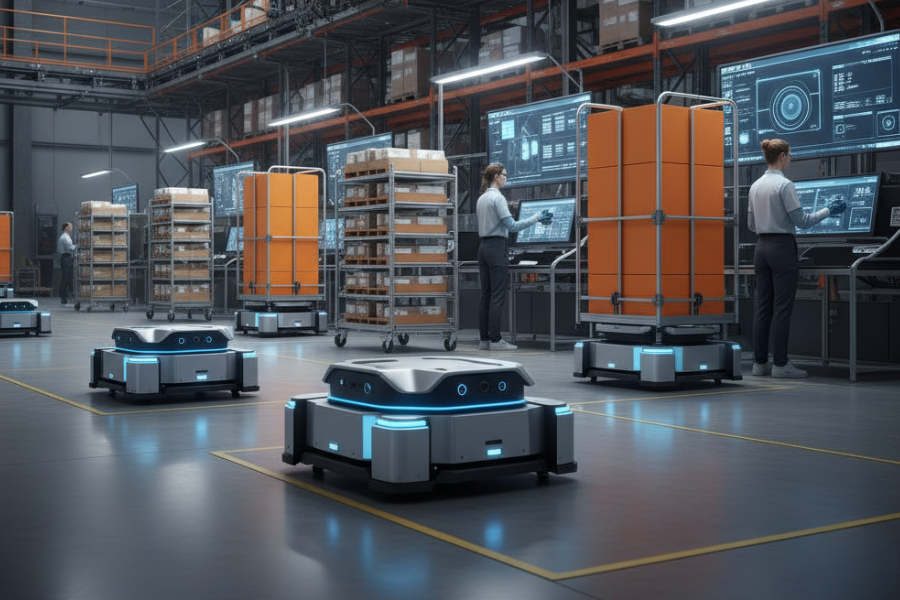
How Goods-to-Person Systems Work Using Autonomous Mobile Robots
Goods-to-person systems operate through a tightly integrated workflow combining robotics, software, and human effort.
- Order Assignment — The Warehouse Management System (WMS) or Warehouse Execution System (WES) receives orders and prioritizes tasks based on urgency, batching, and inventory location.
- Robot Tasking — Fleet management software directs AMRs to retrieve the required storage units (shelves, pods, totes, or bins) from dense storage zones.
- Autonomous Navigation — Using SLAM and obstacle-avoidance sensors, AMRs move safely through the warehouse, even in shared human-robot spaces. They lift or dock with the inventory unit and transport it to a designated picking station.
- Picking Process — At the station, the operator receives illuminated or voice-directed instructions (often via pick-to-light or augmented reality) to select items from the presented goods. Completed picks are confirmed, and the AMR returns the unit to storage or moves to the next task.
- Cycle Completion — Empty or partially picked units are restocked, while finished orders proceed to packing, sorting, or shipping.
This process minimizes non-value-added movement, enabling pick rates of 300–500+ units per hour per operator — far surpassing manual methods. Many systems support batch picking, where multiple orders are handled simultaneously at one station for even greater efficiency.
Goods-to-Person Robot Solution Example
Warehouse Use Cases and Real-World Applications
Goods-to-person robots excel in high-SKU, high-volume environments, particularly e-commerce fulfillment, retail distribution, and third-party logistics (3PL).
- E-commerce Giants — Amazon pioneered large-scale G2P with its Kiva (now Amazon Robotics) systems, deploying hundreds of thousands of AMRs to bring pods to pickers. This model has become the benchmark, enabling rapid same-day shipping.
- Retail and Apparel — Companies like Nike and Walmart use Geek+ AMRs in goods-to-person configurations to handle seasonal spikes and diverse inventories, reducing picker fatigue in massive distribution centers.
- Grocery and Micro-Fulfillment — Operators such as Ocado employ cube-based G2P systems with AMRs or shuttles for ultra-fast order assembly in urban dark stores.
- Fashion and General Merchandise — Exotec’s Skypod system, with climbing robots fetching bins from high-density racks, serves fashion retailers needing high storage density and quick access to variable SKUs.
These deployments demonstrate G2P’s versatility across industries facing fluctuating demand and tight delivery windows.
Benefits of Goods-to-Person Robots
Implementing G2P systems powered by AMRs delivers measurable advantages:
- Increased Speed and Productivity — By eliminating walking, operators achieve 3–6x higher pick rates compared to traditional methods, often reaching 350–500+ picks per hour.
- Superior Accuracy — With goods presented clearly and directed picking tools, error rates drop below 0.1%, improving order quality and reducing returns.
- Labor Reduction and Cost Savings — Warehouses cut reliance on manual labor by 40–60%, easing recruitment challenges and lowering overtime expenses. ROI typically arrives within 18–36 months.
- Improved Worker Ergonomics and Safety — Stationary picking reduces physical strain, lowers injury risk, and enhances job satisfaction — leading to reduced turnover.
- Scalability and Flexibility — AMRs deploy quickly with minimal infrastructure changes, allowing easy fleet expansion during peaks.
These benefits make G2P ideal for operations seeking sustainable efficiency gains.
Limitations and Challenges
Despite strong advantages, goods-to-person robots have constraints:
- High Initial Investment — AMR fleets, software, and station setup require significant upfront capital, though leasing models mitigate this.
- Infrastructure Compatibility — Systems perform best with organized, flat floors and compatible racking; retrofitting older warehouses can add costs.
- Item Suitability — Less effective for oversized, fragile, or very heavy goods that require specialized handling or don’t fit standard totes/shelves.
- System Complexity — Fleet management, WMS integration, and maintenance demand skilled IT support and ongoing software updates.
- Space Trade-offs — While dense storage maximizes footprint, dedicated picking zones reduce flexible space for other activities.
Careful planning and vendor selection help overcome these hurdles.
Comparison with Traditional Picking Systems
Traditional person-to-goods picking relies on manual travel or basic tools like carts and voice guidance. Here’s how it stacks up against goods-to-person AMR systems:
| Aspect | Goods-to-Person (AMR-Based) | Traditional Person-to-Goods Picking |
|---|---|---|
| Picker Travel Time | Eliminated (robots bring goods) | 50–70% of shift spent walking |
| Pick Rate (UPH) | 300–500+ | 80–150 |
| Accuracy | 99.9%+ with directed tools | 98–99% (higher error risk) |
| Labor Requirements | Lower (fewer operators needed) | Higher (more staff for volume) |
| Scalability | High (add robots easily) | Limited (requires more people/space) |
| Initial Cost | High (but fast ROI) | Low |
| Flexibility | Excellent for dynamic layouts | Good for simple, static operations |
G2P systems shine in high-throughput, variable-demand settings, while traditional methods remain viable for low-volume or specialized tasks.
FAQs
What are goods-to-person robots?
Goods-to-person robots use Autonomous Mobile Robots (AMRs) to transport inventory directly to stationary pickers, eliminating walking and boosting efficiency in warehouses.
How much do goods-to-person systems improve productivity?
G2P systems typically increase pick rates by 3–6x over manual methods, achieving 300–500+ units per hour per operator while reducing labor needs.
Are goods-to-person robots suitable for small warehouses?
Yes, especially flexible AMR-based systems that require minimal infrastructure changes and scale incrementally, making them accessible beyond large facilities.
What is the main difference between goods-to-person and person-to-goods?
Goods-to-person brings items to workers (reducing travel), while person-to-goods requires workers to go to items (more labor-intensive but lower upfront cost).
How long does ROI take for goods-to-person robots?
Most operations achieve payback within 18–36 months through labor savings, higher throughput, and reduced errors.
Conclusion
Goods-to-person robots, driven by Autonomous Mobile Robots, are transforming warehouse operations by prioritizing efficiency, accuracy, and worker well-being. From e-commerce fulfillment centers to retail distribution hubs, these systems deliver substantial productivity gains while addressing modern logistics challenges like labor scarcity and speed demands.
As part of a comprehensive automation strategy, G2P solutions complement other mobile robots to create agile, future-ready warehouses. Explore how they fit your operation — start with our in-depth pillar guide: [Internal Link: Mobile Robots for Warehouse Management].
Ready to evaluate goods-to-person robots for your facility? Contact robotics providers for a customized assessment and take the next step toward smarter warehouse management.
To understand how these systems work together, read our complete guide on mobile robots for warehouse management.