
Introduction: The Digital Revolution in Education
The classroom of yesterday might have been about textbooks and chalkboards, but the learning landscape of today is rapidly evolving. We’re living in an era where technology and artificial intelligence (AI) are no longer futuristic concepts, but powerful tools that can fundamentally change how to get smarter in school. Are you leveraging these innovations to their fullest potential?
This deep-dive guide will explore how modern technology and intelligent AI applications can enhance every aspect of your academic journey. From personalized learning experiences and efficient study aids to advanced research tools and improved collaboration, the digital age offers unprecedented opportunities for students to excel. Get ready to transform your study habits and unlock a smarter, more efficient way to learn. It’s time to embrace the future of education.
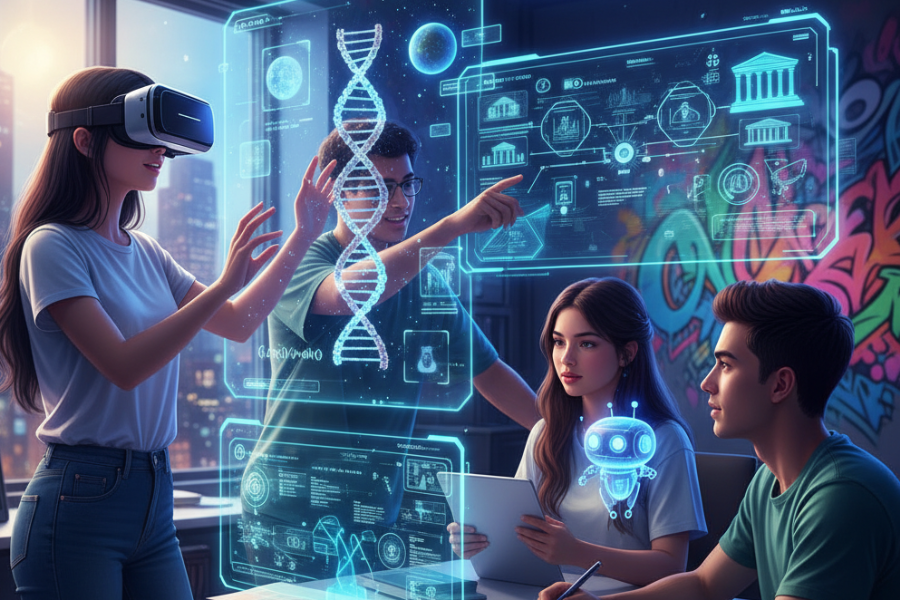
1. Personalized Learning: AI as Your Private Tutor
One of the most profound impacts of AI in education is its ability to offer personalized learning experiences. Unlike a one-size-fits-all classroom, AI-powered platforms can adapt to your individual pace, strengths, and weaknesses, making learning incredibly efficient. This is a game-changer for anyone asking how to get smarter in school.
How AI personalizes learning:
- Adaptive Learning Platforms: Tools like Khan Academy and Coursera use AI to recommend lessons and practice problems based on your performance.
- Intelligent Tutoring Systems (ITS): These systems provide real-time feedback and hints, guiding you through complex problems just like a human tutor would.
- Customized Study Paths: AI can identify your learning gaps and suggest specific resources or exercises to address them.
This tailored approach ensures that your study time is spent where it’s most impactful, maximizing your learning potential.
2. Supercharging Your Study Habits with Smart Apps
Beyond personalized tutors, a vast ecosystem of apps and digital tools can dramatically boost your study efficiency. These aren’t just gadgets; they’re designed with cognitive science in mind to enhance focus, memory, and organization.
Essential tech tools for smarter studying:
- Flashcard Apps (e.g., Anki, Quizlet): Utilize spaced repetition algorithms to optimize memory retention. They show you cards just before you’re about to forget them.
- Note-Taking Apps (e.g., Evernote, OneNote, Notion): Digitize and organize your notes, allowing for easy search, multimedia integration, and collaboration.
- Focus/Productivity Apps (e.g., Forest, Freedom): Help minimize digital distractions by blocking websites or gamifying your focus periods.
- Mind Mapping Software (e.g., MindMeister, XMind): Visually organize complex information, making connections clearer and aiding comprehension.
By integrating these tools, you can transform how you manage information and enhance your learning process.
3. AI for Research and Information Synthesis
The sheer volume of information available online can be overwhelming. AI-powered tools are revolutionizing how students conduct research, gather information, and synthesize complex data, making it easier to get smarter in school.
AI-driven research advantages:
- Smart Search Engines: Go beyond basic keyword searches, understanding context and providing more relevant results.
- Academic Paper Summarizers: Tools that can quickly distill the main points of lengthy research papers.
- Citation Managers (e.g., Zotero, Mendeley): Automate the process of organizing sources and generating bibliographies, saving precious time.
- Plagiarism Checkers: Ensure academic integrity by identifying unoriginal content.
These tools allow you to spend less time searching and more time analyzing and understanding the material.
4. Enhancing Collaboration and Communication
Technology has transformed group projects and discussions, making collaborative learning more seamless and effective. Remote learning, especially, has highlighted the critical role of digital tools in maintaining connection and productivity.
Tech for collaborative learning:
- Video Conferencing (e.g., Zoom, Google Meet): Facilitates virtual study groups and discussions, regardless of geographical location.
- Collaborative Document Editing (e.g., Google Docs, Microsoft 365): Allows multiple students to work on the same document in real-time.
- Project Management Tools (e.g., Trello, Asana): Help groups organize tasks, track progress, and assign responsibilities efficiently.
- Online Discussion Forums: Provide platforms for asynchronous discussions and peer-to-peer learning.
These platforms foster teamwork and communication, enriching the overall learning experience. Internal Link: [For a complete student guide to academic excellence, explore our pillar post: How to Get Smarter in School: A Complete Student Guide.]
5. Leveraging AI for Writing and Feedback
Writing is a fundamental skill in academics. AI is emerging as a powerful assistant, not to write for you, but to help you write better by providing instant feedback and enhancing your writing process. This directly contributes to how to get smarter in school.
AI tools for writing improvement:
- Grammar and Style Checkers (e.g., Grammarly, ProWritingAid): Identify grammatical errors, suggest stylistic improvements, and enhance clarity.
- Paraphrasing Tools: Can help you rephrase sentences to avoid accidental plagiarism and improve your articulation (use with caution and always cite original sources!).
- Outline Generators: Some AI tools can help you structure your essays or reports by suggesting logical outlines based on your topic.
- Feedback Bots: Emerging AI tools can provide constructive feedback on your writing structure, argument strength, and flow.
These aids can polish your prose, refine your arguments, and ultimately make you a more confident writer.
6. Immersive Learning Experiences: VR and AR in Education
Beyond traditional screens, virtual reality (VR) and augmented reality (AR) are opening up entirely new dimensions of learning. These immersive technologies offer engaging and interactive ways to explore complex subjects, making learning more memorable and fun.
The promise of immersive tech:
- Virtual Field Trips: Explore ancient ruins, distant planets, or even the inside of a human cell without leaving your classroom.
- Simulations: Practice complex procedures in a risk-free virtual environment, from dissecting a frog to performing surgery.
- Interactive Models: Manipulate 3D models of molecules, historical artifacts, or architectural designs.
- Gamified Learning: Turn challenging subjects into engaging games that motivate and educate.
These technologies are transforming passive observation into active participation, greatly enhancing how to get smarter in school.
7. Accessibility and Inclusivity Through Technology
Technology also plays a crucial role in making education more accessible and inclusive for all students. AI-powered tools can break down barriers, providing support tailored to diverse learning needs and styles.
Tech for inclusive learning:
- Text-to-Speech and Speech-to-Text: Assist students with reading difficulties or those who prefer auditory learning.
- Translation Tools: Break down language barriers in a diverse classroom setting.
- Customizable Interfaces: Allow students to adjust font sizes, colors, and layouts to suit their visual preferences or needs.
- Adaptive Testing: AI can adjust the difficulty of questions in real-time to match a student’s level, reducing anxiety and providing a more accurate assessment.
These innovations ensure that every student has the tools they need to succeed and truly get smarter in school.
8. Critical Thinking in the Age of AI
While AI offers immense benefits, it’s vital to remember that technology is a tool, not a substitute for critical thinking. Learning how to evaluate AI-generated content and develop independent thought are more important than ever.
Developing critical thinking with AI:
- Source Verification: Always cross-reference information from AI with reputable human-authored sources.
- Questioning AI outputs: Don’t blindly accept AI answers; challenge them and seek deeper understanding.
- Ethical Considerations: Understand the biases and limitations of AI.
- Problem-Solving: Use AI to assist in problem-solving, not to solve problems for you.
The goal is to use AI to augment your intelligence, not to diminish your own cognitive effort.
9. Staying Updated: The Evolving Landscape
The world of technology and AI is constantly changing. To continue benefiting from these tools, it’s important to stay informed about new developments and adapt your strategies accordingly.
Tips for staying updated:
- Follow EdTech News: Keep an eye on reputable education technology publications.
- Experiment with new tools: Don’t be afraid to try new apps or platforms that promise to enhance learning.
- Share and learn from peers: Discuss new technologies with classmates and educators.
Embracing a mindset of continuous learning, both in academics and in technology, is crucial for how to get smarter in school in the long run. External Link: [Explore cutting-edge research in AI and education from institutions like MIT’s Abdul Latif Jameel World Education Lab.]
Conclusion: Your Digital Advantage
The question of how to get smarter in school now has a powerful, tech-infused answer. By strategically integrating technology and artificial intelligence into your learning routine, you can create a more personalized, efficient, and engaging educational experience. From mastering core concepts with adaptive platforms to refining your writing with AI feedback and exploring subjects through VR, the possibilities are vast.
Remember, technology is a tool to empower you. Use it wisely, critically, and creatively. Embrace these innovations to transform your academic journey, not just for better grades, but for a deeper, more impactful understanding of the world. The future of smart learning is here, and it’s digital. Internal Link: [For strategies that combine tech with traditional methods, see our post on how to get smarter in school with better focus, memory, and planning.]
How to Get Smarter in School: A Complete Student Guide is a transformative roadmap by Dr. Asif Memon that redefines academic success through the integration of Artificial Intelligence (AI) and Information Technology. Rather than simply increasing effort, the guide advocates for “smarter effort” by leveraging digital tools to personalize the learning experience. Key strategies include utilizing Intelligent Tutoring Systems for tailored exercises, streamlining research with AI-powered summarization, and employing spaced repetition apps to maximize memory retention. By combining these tools with digital organization and a critical-thinking mindset, students can transform their academic journey and unlock their full potential
Frequently Asked Questions (FAQ)
Q1: Will AI replace teachers or the need for human interaction in school?
A1: No, AI is seen as a powerful assistant or tool to augment teaching and learning, not replace it. Teachers provide crucial human elements like empathy, mentorship, and social-emotional development that AI cannot replicate. AI will likely free up teachers to focus more on personalized attention and complex problem-solving.
Q2: What are some free AI tools I can start using right away to get smarter in school?
A2: Many powerful tools have free tiers or versions. Khan Academy offers adaptive learning. Quizlet is excellent for flashcards and spaced repetition. Grammarly has a robust free version for writing assistance. Google Scholar helps with academic research, and Notion is a versatile free tool for note-taking and organization.
Q3: How do I avoid becoming over-reliant on AI and still develop my own skills?
A3: The key is to use AI as a support tool, not a crutch. For example, use AI to check your writing after you’ve drafted it yourself, or to get hints for a problem rather than the full solution. Actively engage in critical thinking, source verification, and independent problem-solving alongside AI tools to ensure skill development.
Q4: Is it safe to use AI tools with my personal study data?
A4: Always be mindful of data privacy. Read the terms of service for any AI tool you use. For highly sensitive information, exercise caution. Many educational platforms are designed with student privacy in mind, but it’s always good practice to avoid inputting highly personal data into general AI tools.
Q5: What’s the biggest advantage of using AI for students trying to get smarter in school?
A5: The biggest advantage is personalization. AI can tailor the learning experience precisely to your needs, identifying your strengths, targeting your weaknesses, and adapting content and pace. This bespoke approach makes learning incredibly efficient and effective, something traditional education often struggles to provide on a large scale. External Link: [Discover more about the ethical implications and future of AI in education from UNESCO’s reports.]