
The Digital Shift: What is IoT in the Automotive Sector?
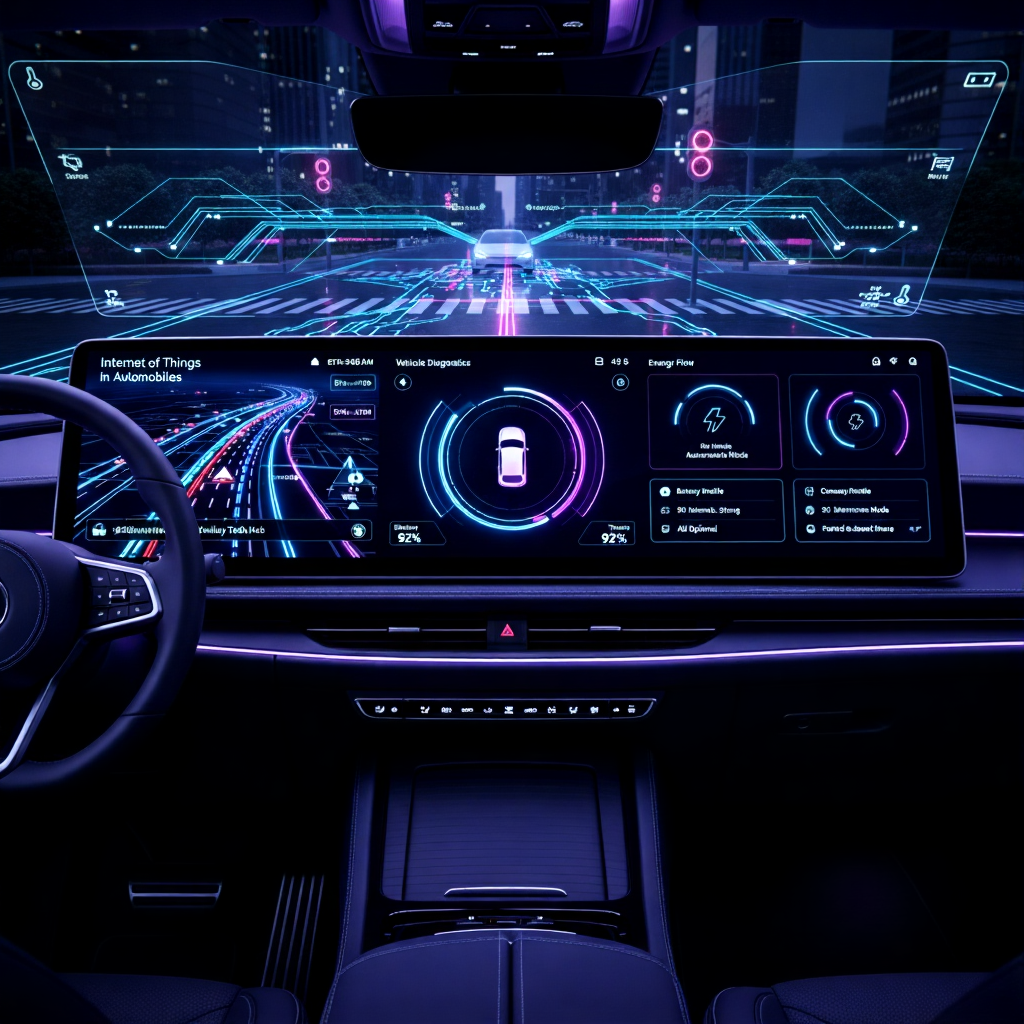
Gone are the days when a car was just a mechanical machine. Today, your vehicle is essentially a high-powered computer on wheels. This transformation is driven entirely by the internet of things in automobiles.
But what does this mean for the average driver or the savvy IT professional?
Essentially, it is the integration of sensors, software, and connectivity into vehicles to collect and exchange data. This allows cars to communicate with other cars, traffic lights, and even the manufacturer.
Here is the kicker:
We are no longer just looking at “smart” features. We are looking at a total overhaul of the driving experience. Whether it is a self-parking system or real-time engine diagnostics, the internet of things in automobiles is the silent engine under the hood.
Consequently, understanding this tech is vital for businesses looking to scale in the modern economy.
The Foundation: How IoT Architecture Powers Vehicles
To understand how a car “thinks,” we must look at its blueprint. Like any complex system, these vehicles rely on a structured Internet of Things Architecture.
Think of the architecture as the nervous system of the car. It consists of layers that handle data from the moment a sensor detects an obstacle until the brakes are applied.
The standard layers include:
- Perception Layer: Sensors that monitor tire pressure, heat, and distance.
- Network Layer: The 5G or satellite connection that moves data.
- Processing Layer: The “brain” that analyzes the incoming data.
- Application Layer: The dashboard alerts or autonomous steering actions.
Without this solid framework, a connected car would be overwhelmed by data. In addition, a robust architecture ensures that safety systems take priority over entertainment systems.
Key Applications of the Internet of Things in Automobiles
The internet of things in automobiles manifests in several ways that improve our daily lives.
1. Predictive Maintenance
Imagine your car telling you it needs a new battery before it actually dies. IoT sensors track the wear and tear of every component. Consequently, manufacturers can alert drivers to potential issues, saving thousands in repair costs.
2. Advanced Driver Assistance Systems (ADAS)
These systems use IoT to keep you safe. Features like lane-keeping assist and adaptive cruise control rely on real-time data from the vehicle’s environment.
3. In-Car Infotainment
Connectivity has turned the dashboard into a smartphone. From streaming music to real-time navigation updates, the infotainment system is a primary touchpoint for users.
4. Fleet Management
For IT businesses and logistics companies, IoT is a game-changer. Managers can track the location, fuel consumption, and driver behavior of hundreds of vehicles from a single screen.
[ Learn more about Internet of Things Telecommunications and 5G] https://robologicslab.com/internet-of-things-telecommunications/
V2X Communication: The Road to Autonomy
If the internet of things in automobiles has a superpower, it is V2X (Vehicle-to-Everything) communication.
Think about it:
A car that knows a traffic light is about to turn red before it even sees it. That is the power of V2X.
V2X is broken down into four categories:
- V2V (Vehicle-to-Vehicle): Cars “talk” to each other to avoid collisions.
- V2I (Vehicle-to-Infrastructure): Cars connect to traffic lights and parking meters.
- V2P (Vehicle-to-Pedestrian): Cars detect signals from smartphones of nearby walkers.
- V2N (Vehicle-to-Network): Cars sync with the cloud for traffic and weather updates.
Furthermore, this level of connectivity is the fundamental building block for fully autonomous driving.
The Role of AI and Data Analytics
Raw data is just a pile of numbers. To make it useful, we need Artificial Intelligence in Internet of Things.
AI algorithms process the massive streams of data generated by connected cars. They learn your driving habits, optimize fuel efficiency, and even help the car “recognize” objects on the road.
But wait, there’s more.
AI doesn’t just improve the drive; it improves the car’s design. Manufacturers use data from millions of vehicles to see which parts fail most often. Consequently, they can engineer better vehicles for the next generation.
Explore our guide on Artificial Intelligence in Internet of Things
Business Benefits for Fleet Owners and Manufacturers
For IT professionals and business owners, the internet of things in automobiles offers massive ROI.
Reduced Operational Costs:
By optimizing routes and monitoring fuel, companies can slash their overhead.
New Revenue Streams:
Manufacturers are now becoming software providers. They offer subscription-based features, such as “over-the-air” performance upgrades or premium navigation.
Enhanced Safety:
Fewer accidents mean lower insurance premiums. In addition, real-time tracking provides a level of security that was previously impossible.
Cybersecurity and Energy Challenges
However, the road is not without bumps. As we connect more cars, we create more targets for hackers.
The Security Threat
A hacked car is a physical danger. This is why Internet of Things and Cyber Security is the most critical part of the development process. Manufacturers must ensure that every connection is encrypted and every software update is authenticated.
The Energy Dilemma
Connected cars, especially Electric Vehicles (EVs), require smart energy management. The Internet of Things and Energy sector is working to ensure that cars can “charge smart” during off-peak hours to avoid crashing the power grid.
[Link to an authority like NHTSA on Cybersecurity standards]https://cybersecop.com/news/2022/11/4/nhtsa-compliance-automotive-cybersecurity-guide
[ Link to IEEE report on V2X technology] https://ieeexplore.ieee.org/document/9307388
Conclusion
The internet of things in automobiles is not just a trend; it is the new standard. For the beginner, it offers convenience. For the professional, it offers a wealth of data. For the IT business, it offers a platform for innovation.
As we look toward 2026, the lines between automotive engineering and software development will continue to blur. The result? A safer, faster, and more efficient world for everyone.
Are you ready to join the connected car revolution?
Frequently Asked Questions (FAQ)
Q: What is the main benefit of internet of things in automobiles?
A: The main benefits are improved safety through ADAS, reduced maintenance costs via predictive diagnostics, and enhanced efficiency for fleet owners.
Q: Is my data safe in a connected car?
A: Security is a top priority. Manufacturers use end-to-end encryption and secure gateways to protect the internet of things in automobiles from cyber threats.
Q: Does IoT in cars require 5G?
A: While 4G works for basic features, 5G is necessary for high-speed tasks like autonomous driving and real-time V2V communication due to its low latency.
Q: How does IoT help electric vehicles?
A: IoT monitors battery health and helps drivers find charging stations. It also allows the car to communicate with the smart grid to optimize energy consumption.