
Introduction
Imagine a factory floor that never sleeps, never makes a mistake, and predicts its own repairs before a breakdown occurs. This isn’t science fiction; it is the reality of modern manufacturing. The driving force behind this shift is the strategic use of internet of things industrial applications.
While consumer IoT focuses on convenience, industrial IoT (IIoT) focuses on efficiency, safety, and massive scalability. For professionals and IT businesses, these technologies represent the next frontier of the digital economy.
But here is the kicker:
Data without action is just noise. To truly succeed, businesses must understand how to implement these applications within a solid framework. In this guide, we will explore how internet of things industrial applications are reshaping the global supply chain.
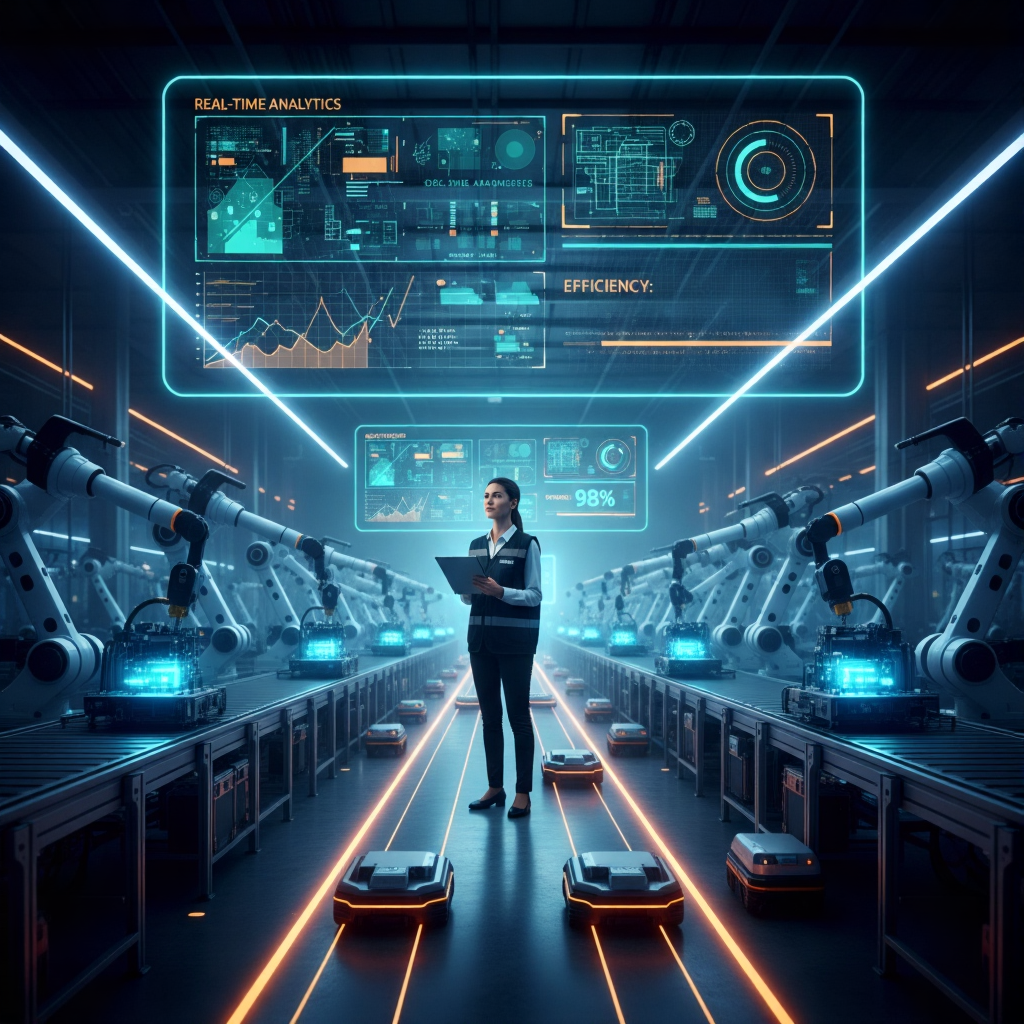
What are Internet of Things Industrial Applications?
In simple terms, these applications involve connecting industrial machinery to the internet. Unlike your smart fridge, these systems handle high-stakes data in environments like oil rigs, assembly lines, and power plants.
Internet of things industrial applications are the backbone of what we now call Industry 4.0. By using specialized sensors and actuators, companies can monitor physical processes in real-time. This visibility allows for a level of precision that was previously impossible.
Furthermore, these applications do not exist in a vacuum. They rely on a structured Internet of Things Architecture to ensure data reaches the right hands at the right time. Consequently, understanding the software and hardware synergy is vital for any IT strategist.
The Evolution of the Smart Factory
The journey toward the smart factory has been gradual. Initially, factories relied on manual labor and disconnected machines. Later, automation introduced programmable logic controllers (PLCs).
However, the real breakthrough came with the integration of internet of things industrial applications.
Today, machines “talk” to one another. They share data regarding performance, temperature, and output. Think about it: a machine in Germany can now send a status update to a manager in New York instantly. This connectivity eliminates geographical barriers and streamlines global operations.
Top 5 Internet of Things Industrial Applications
To see the value of IIoT, we must look at specific use cases. Here are the most impactful applications currently driving the market.
1. Predictive Maintenance
This is perhaps the most famous of all internet of things industrial applications. Instead of fixing a machine after it breaks, sensors detect vibrations or heat signatures that signal a future failure.
The best part?
Companies can schedule repairs during planned downtime, saving millions in lost productivity.
2. Real-Time Asset Tracking
In large-scale logistics, knowing the exact location of assets is crucial. IoT-enabled tags track pallets, containers, and even individual tools across a global map. This reduces loss and optimizes the supply chain.
3. Smart Metering and Energy Management
Industrial plants are massive energy consumers. IoT applications monitor energy usage at every node. By identifying energy-intensive processes, businesses can shift operations to off-peak hours or optimize machine settings to reduce costs.
4. Connected Workers and Safety
Safety is a priority in any industrial setting. Wearable internet of things devices monitor worker heart rates, environmental toxins, or falls. If a worker enters a hazardous zone, the system can automatically shut down machinery or send an alert.
5. Quality Control Automation
High-speed cameras and sensors inspect products on the assembly line with 99.9% accuracy. These internet of things industrial applications catch defects that the human eye might miss, ensuring consistent product quality.
[ Link to piller page “https://robologicslab.com/internet-of-things-architecture-the-ultimate-guide/Internet of Things Architecture: The Ultimate Guide”]
How IIoT Complements IoT Architecture
You might be wondering: how do these applications stay organized?
The success of any industrial application depends on the underlying Internet of Things architecture. Without a clear path from the sensor (Perception Layer) to the dashboard (Application Layer), the data is useless.
In industrial settings, we often use “Edge Computing.” This means data is processed on-site to reduce latency. If a robotic arm needs to stop to avoid a collision, it cannot wait for a cloud server to respond. Therefore, the architecture must be fast, local, and incredibly resilient.
Benefits for IT Businesses and Professionals
For IT businesses, the move toward industrial IoT isn’t just about technology—it’s about ROI.
Increased Efficiency:
Automation reduces the margin for error. Consequently, production cycles become faster and more predictable.
Data-Driven Decision Making:
Management no longer relies on “gut feelings.” They have hard data. In addition, these insights help in forecasting demand and managing inventory levels.
New Revenue Streams:
Manufacturers are now shifting to “Product-as-a-Service” models. Instead of just selling a machine, they sell “uptime” and maintenance, powered by their internet of things industrial applications.
Challenges in Industrial IoT Implementation
But wait, there’s more. It isn’t all smooth sailing.
Legacy System Integration:
Many factories use machines that are 20 or 30 years old. These machines were never meant to be online. Retrofitting them with modern sensors is a complex task for any IT professional.
Cybersecurity Risks:
Every connected device is a potential entry point for hackers. In an industrial setting, a breach could lead to physical damage or environmental disasters. Therefore, robust security protocols are mandatory.
Data Silos:
Different departments often use different software. Breaking down these silos to create a unified data stream is a major hurdle for IT business strategists.
[External Link Placeholder: Link to an authority like Deloitte’s “IIoT and the Industry 4.0 Revolution”] https://www.epicor.com/en/blog/technology-and-data/what-is-industry-4-0/
The Role of AI and 5G in Industry 4.0
The future of internet of things industrial applications is tied to AI and 5G.
5G provides the low-latency connectivity required for thousands of devices to communicate simultaneously. This is essential for large-scale operations where Wi-Fi or 4G would simply crash.
Furthermore, Artificial Intelligence processes the “Big Data” generated by these machines. AI can spot patterns that humans would miss, such as a 0.5% decrease in efficiency that signals a deep-rooted mechanical issue.
Surprisingly, we are only at the beginning of this journey. As these technologies mature, the gap between traditional and smart manufacturing will only widen.
[Link to cluster page “Artificial Intelligence in Internet of Things”] https://robologicslab.com/artificial-intelligence-in-internet-of-things/
[Link to IndustryWeek’s trends for 2025] https://www.industryweek.com/white-papers/whitepaper/55281275/2025-manufacturing-trends-and-technology-report
Conclusion
The rise of internet of things industrial applications is inevitable. For beginners, it is a fascinating look at the future of work. For professionals, it is a call to action to upskill. For IT businesses, it is the key to staying competitive in a global market.
The transition to a smart factory requires more than just buying sensors. It requires a vision, a secure architecture, and a commitment to data-driven growth.
Are you ready to modernize your operations?
Frequently Asked Questions (FAQ)
Q: What is the difference between IoT and IIoT?
A: IoT is a broad term for connected devices. IIoT refers specifically to internet of things industrial applications within manufacturing, energy, and logistics where reliability and safety are the top priorities.
Q: Can old factories use IoT?
A: Yes. This is called “retrofitting.” By adding external sensors to legacy machines, even old equipment can become part of a modern internet of things industrial applications network.
Q: How does IIoT improve worker safety?
A: Through wearables and proximity sensors. These internet of things industrial applications can alert workers to dangers or automatically stop machines if a person gets too close to a moving part.
Q: Is 5G necessary for industrial IoT?
A: While not strictly necessary for small setups, 5G is crucial for large-scale internet of things industrial applications that require high speed and massive device density.